
Evolving Employee Resource Groups – a Creative Approach from Erie Insurance

Tesha L. Nesbit Arrington, Erie Insurance's Director of Diversity & Inclusion and Strategic Analytics, presented Erie's D&I best practices at a recent National Diversity Council - Carolinas "Best Practices" Meeting

Tesha L. Nesbit Arrington, Erie Insurance’s Director of Diversity & Inclusion and Strategic Analytics, presented Erie’s D&I best practices at a recent National Diversity Council – Carolinas “Best Practices” Meeting

In the diversity and inclusion field, there continues to be continued discussion on the importance of Employee Resource Groups, or ERGs. Traditionally, they have been referred to as “affinity groups” as they bring together employees around a common constituency factor such as Black, Hispanic, Women, Young Professionals, LGBT (Lesbian, Gay, Bisexual, Transgender), Veterans and more. These groups help make employees feel more at home and included in the workplace, and provide activities such as professional and social networking, mentoring and community involvement.

Over the years, ERGs have continued to evolve. Some companies now refer to ERGs as BRGs – Business Resource Groups. This underscores that the true goal of the ERG is to make the employees and the business overall more effective. There should be a strong connection between the strategy and goals of the ERG (or BRG) and the company. Activities such as leadership development, connecting the company to the community and marketplace, and even input into product or services development helps the organization achieve its business goals.

As a diversity and inclusion consultant, I often attend various workshops to continue to pick up the latest development in my field. In early July, I attend a half day “Diversity and Inclusion Best Practices” seminar organized by the National Diversity Council – Carolinas in Durham, NC. One of the presenters was Tesha L. Nesbit Arrington, Director of Diversity & Inclusion and Strategic Analytics at Erie Insurance Group.

Ms. Nesbit, in presenting several diversity and inclusion best practices from Erie Insurance, highlighted their innovative approach to employee resource groups. Instead of starting with constituency-based resource groups, they started with groups focused around a particular business focus. Their first four ERGs were:
SynERgIzE – focused on building an inclusive workplace
Multiplicity – for diverse employee recruiting outreach
CamaradERIE – building and promoting diversity among the agent community
ExpERIEnce – around providing best customer experience and service for its diverse customer set.

After these networks were up, running and successful with participation from a wide range of constituencies, that provided a strong base for next launching constituency based affinity groups. The first two were women and multi-generational, with African-American and Veterans’s charter proposals in the queue.

Erie Insurance continues to build ongoing robust diversity and inclusion initiatives on this base, including their “Dignity and Respect” Campaign and scoring 100% on the Human Rights Campaign (HRC) Corporate Equality Index, which measures corporate LGBT inclusion.
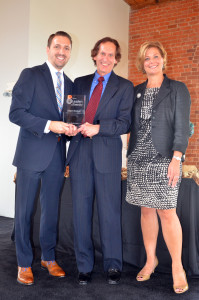
Reflections from the Triangle Business Journal Leaders in Diversity Awards

I received a “Leader in Diversity – Role Model” award from TBJ publisher Bryan M. Hamilton and PNC Bank Regional President Paula K. Fryland. (Photography courtesy of Triangle Business Journal | Dathan Kazsuk)

I received a “Leader in Diversity – Role Model” award from TBJ publisher Bryan M. Hamilton and PNC Bank Regional President Paula K. Fryland. (Photography courtesy of Triangle Business Journal | Dathan Kazsuk)


On Thursday, September 12, I was honored along with several other awardees at a luncheon held by the Triangle (NC) Business Journal for their inaugural “Leaders in Diversity” Awards. I received the “role model”and was cited specifically for my leadership for LGBT (Lesbian, Gay, Bisexual, Transgender) Diversity work during my 31-year career at IBM, now as the President and Founder of Total Engagement Consulting by Kimer and in various community activities. Other honorees included small, medium and large companies as well as individuals from corporate and non-profit settings. And the winners themselves were quite diverse: women and men, older and younger, various racial and cultural backgrounds, even a woman from Iran who formed a construction engineering firm. (Link to list of all winners.) Additional link: my own award interview.

I feel this kind of recognition is very important. Not only does it encourage those doing the often difficult diversity work to stay diligent, it also signals to the larger community that rigorously pursuing diversity is very critical to economic growth and success in our communities.

The lifetime achievement award was given to retired University of North Carolina basketball Coach Dean Smith. What is special about Coach Smith is that he strongly supported diversity without a lot of fanfare simply as a core value of his life and coaching philosophy. He was a leader in college sports for racial integration of college teams, and was known for individually focusing on every single player he coached to help them maximize their growth both as an athlete and a person. Assisting others to reach their full potential, particularly within a difficult environment, is a key facet of diversity and inclusion.

I also commend PNC Bank for stepping up as the lead sponsor for these awards. The PNC senior leader for all of Eastern North Carolina, Regional President Paula K. Fryland, was present to help hand out the awards as well as deliver a brief keynote address. Paula succinctly articulated the importance of diversity and inclusion as a core value of PNC and the tie to business success. She mentioned the importance and pursuing diversity with clients, employees, supplier and the community, and highlighted four PNC initiatives:
• Their 34 employee resources groups with over 6000 participants for engaging their workforce.
• Education efforts across all levels of PNC so that everyone understands the compelling business rationale for diversity and inclusion initiatives
• Recognizing the various diversity constituency months throughout the year to further engage employees and the community
• Investing financially in philanthropic such as their recent significant investments in North Carolina for early childhood education.

Even within the LGBT community, PNC Bank does follow through with their strategy; they are a corporate sponsor of the National Gay and Lesbian Chamber of Commerce (NGLCC), which promotes business development of LGBT-owned business in the US and globally.

PNC Bank and Triangle Business Journal – well done!