
Announcement: Engaging with an Organization Developing A New Generation of Diverse Leaders

One of my passions and core areas of my consulting practice is diversity strategy and execution within organizations. I firmly believe that any organization as well as any city, state, province or country can be stronger and healthier if it truly leverages its complete diversity and brings out the best in every single participant.

In that vain, I am pleased to announce that I have accepted the invitation to be a trustee of a recently formed new nonprofit called “Collegiate Bridges”. The goal of Collegiate Bridges is to execute a crucial component of the Generational Plan of America of the Diversity Place by creating a paradigm shift in the way students from underrepresented populations are recruited by colleges in the US.
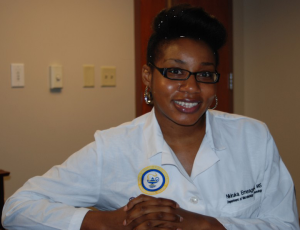
Students, such as Nkiruka Emeagwali, a medical student at Meharry Medical College in Nashville, Tennessee who was featured in an America - The Diversity Place online story, can be trained to provide health care to under-served populations

Students, such as Nkiruka Emeagwali, a medical student at Meharry Medical College in Nashville, Tennessee who was featured in an America – The Diversity Place online story, can be trained to provide health care to under-served populations


The Collegiate Bridges will examine ways to increase high school graduation rates among constituencies that are traditionally lower than the national average. If more students can be given the tools and assistance to graduate and later become innovative problem solvers, we can build a stronger nation and economy.

Some of the strategies of Collegiate Bridges will include innovative use of technology to build a unique “Super Internet Portal” and bridging with individuals, families, communities, faith-based organizations and more.

There are many reasons that inhibit our youth from achieving their full potential. I have blogged about one of these reasons, which is bullying. (link to my most recent blog on bullying which includes links to an earlier blog and several resources.)

The founder of Collegiate Bridges is Albert C. Jones, whose other current endeavors include www.americadiversityplace.com which documented “Stories of America” and “Multicultural Voices Across the Nation” in each of the 48 states in the continental US.

Other confirmed trustees in addition to founder Albert C. Jones and myself include:
• John E. Pierce, Associate VP for Affirmative Action and Diversity Outreach, Creighton University
• Dr. Marcia R. Robinson, Cultural Coordinator, West Las Vegas Art Center
• Dr. Elena Izquierdo, Associate Professor of Teacher Education, University of Texas El Paso
• Dr. Kimberly Fountain, Internal Medicine Physician from Memphis, Tn.

I look forward to working with Albert and this team of trustees to help raise a fully inclusive diverse set of future leaders.

Five Things to Never Say to Gay People

Recently I saw this article on the Diversity Inc website titled “5 Things Never to Say to Blacks” (link) and it inspired me to write my “Five Things Never to Say to Gay People.” In fact, I already created a power point chart with that title that I often use when I present LGBT (Lesbian, Gay, Bisexual and Transgender) diversity sessions. (Link to a 2 minute video of me presenting this topic)

Here are my five:

1. Referring to my sexual orientation as my sexual preference or as my lifestyle. Being gay is who I am, not a preference I chose. It is at the core of my being. Always use the correct term “sexual orientation.”

2. Calling my spouse or “significant other” my pal or my room-mate, and therefore minimalizing or insulting my 21-year committed relationship. In fact now in several states and DC, same gender partners can legally marry, so even husband or wife may be the preferred terms. Best action is to always ask your gay friend how they like their life partner referred as.

3. Using certain charged words like queer, dyke or faggot unless you have built a level or trust or closeness with me.

4. Giving me that platitude that you “love me, you love the sinner but hate the sin” and you assume that

There are many churches and faith organizations that fully affirm LGBT people.

There are many churches and faith organizations that fully affirm LGBT people.

all LGBT people are faithless heathens. First, I do not agree that being gay is a sin – it is the way God made me. And second, there are many LGBT people of deep faith and many churches that are totally affirming of LGBT people.

5. Attributing broad societal issues such as AIDS or child molestation to the gay community. AIDS is a human disease, not a gay disease. More heterosexual people are now infected with the HIV virus than gay people. And the occurrence of child molestation among heterosexual and the gay population is proportionate to the population.

One other point to address. Being a gay man does not mean that I secretly wanted to be a woman, and a lesbian

does not secretly want to be a man. Sexual orientation refers to the gender of the person I am attracted to; heterosexuals are attracted to people of the opposite gender, gays and lesbians are attracted to people of their own gender, and bisexuals are attracted to people of both genders. When a person feels they are not living within their current biological gender (such as Chas Bono), that falls under the transgender, or gender identity, umbrella. Click here to connect to a longer article on transgenderism which I authored.

Bottom line summary – the best bet in interacting with LGBT people is to all be respectful and not afraid to ask questions.