
North Carolina’s “Don’t Say Gay” Law – Bad for Business, Bad for People

NC Senate Bill 49 sends the strong message that these families are bad.

North Carolina Senate Bill 49, Known as “Parents’ Bill of Rights,” but in reality is modeled after Florida’s horrific “Don’t Say Gay” law, is moving through our state legislature at lightening speed. Republicans in our state legislature are ignoring the voices of parents, health professionals and businesses as they ram this bill through.

This bill is bad for both businesses (I am a diversity, equity and inclusion – DEI – consultant and trainer primarily serving businesses) and for people in general.

Bad for Business: Several years ago when we had HB-2, known as the bathroom bill which demonized transgender people and prohibited municipalities from passing nondiscrimination laws based on sexual orientation and gender identity, our state took a huge economic hit. (Estimated over $400M in investment and jobs.)
• Several companies planning to relocate or expand in North Carolina curtailed their plans.
• Some state and local entities outside the state prohibited business travel to North Carolina.
• Several of my clients told me it significantly impeded their hiring new talent or transferring out-of-state employees to North Carolina.
• Even the 2017 NBA All-star game was pulled from Charlotte, NC.

Bad for People: This bill clearly sends a message that there is something wrong or bad about gay, bisexual and transgender people; that there is something so wrong about LGBTQ people that it cannot be discussed in school. What message does this send to a little boy or girl in elementary school that discussion about their two-dads or two-moms families are off limits? NC Governor Cooper even made a strong statement opposing this bill as a divisive culture-wars political ploy.

Corporations flying the Pride Flag without taking meaningful action is nothing more than an empty gesture.

In addition, this bill will further exacerbate the extreme teacher shortage facing North Carolina. First, open-minded progressive teachers would not want to teach in state with such regressive laws, and teachers in general strongly dislike people outside their profession micro-managing what they can and cannot teach.

Calling corporations to action: In closing, I strongly encourage all companies with a North Carolina presence to issue strong statements opposing this law. In addition, any corporate political giving to North Carolina republicans must be curtailed. Proclaiming to value LGBTQ+ diversity while remaining silent about the bill is the height of hypocrisy. Flying the rainbow flag at your facilities in June (LGBTQ Pride Month) without taking meaningful action throughout the year is nothing but meaningless showmanship.

Another delightful and insightful banned book – “Gender Queer” by Maia Kobabe

In November, I published a blog, “These banned books are delightful” in response to a disturbing recent article I read titled, “Battling over books – Conservative groups and Republican Officials are campaigning to ban books from schools and libraries.” The article showed the cover of a children’s book titled “My Two Dads and Me,” that was banned by a school district in Walton County, Florida.

And I have even seen this play out in my own city, Raleigh and Wake County, North Carolina. A few parents even filed a lawsuit demanding that such books as “Lawn Boy” by Jonathan Evison and “Gender Queer” by Maia Kobabe be removed from school libraries for being inappropriate pornography.

So I decided to order these three aforementioned books to read them for myself.

My November blog (link) reviewed two of those books. “My Two Dads and Me” written by Michael Joosten and illustrated by Izak Zenou is targeted for pre-school children to depict two fathers enjoying all kinds of activities with their kids. And “Lawn Boy” by Jonathan Evison, a beautiful novel that follows an Hispanic young man raised in poverty by a struggling single mother.

And now I have read the third book, “Gender Queer” by Maia Kobabe, an autobiography dealing with identifying as nonbinary and asexual. This captivating book was written in “comic strip” format with over 230 pages of beautiful illustrations and heart-felt prose. Reading about this experience of someone different from myself provided me insight to help me grow as a more inclusive and understanding human being.

NOTE: Maia uses the pronouns e/em/eir, that are a variation of the gender-neutral pronouns they/them/their.

Maia tells eir story from eir early years growing up through junior high, high school, college and into the world of teaching. E shares about the struggle of growing up not feeling that e belonged in the boxes of boy or girl, and then later not feeling that e could identify as straight, gay, bisexual or any of the popular labels. Maia was eir own person wanted to live life comfortable in eir own skin.

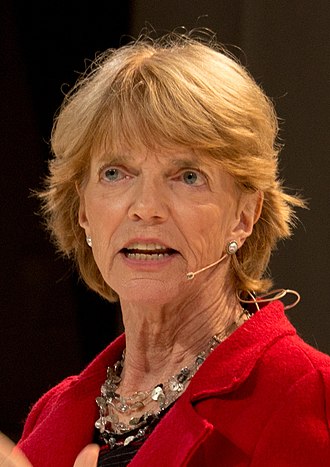
Patricia S. Kirkland, a Canadian-American analytic philosopher noted for her contributions to neurophilosophy and the philosophy of mind.

In addition, Maia does share very important biological scientific work documented by Patricia S. Kirkland, a Canadian-American analytic philosopher noted for her contributions to neurophilosophy and the philosophy of mind. Kirkland’s critical work does document how gender formation in the womb is not solely male or female, but that a percentage of developing babies in the womb have chromosome combinations like XXY, XYY, Solo X and XXYY which brings scientific credence to the reality of gender fluid and nonbinary people.

I highly recommend this book as a way for all of us to open our minds to the reality of the infinite diversity within the human family, including around gender identity and sexual orientation. And this is increasingly important in the business and nonprofit worlds as more younger talent now identify as transgender or nonbinary, even as close minded, bigoted politicians try to deny the existence of these diverse fellow human beings.