In my last blog I wrote about some of the aspects of my July trip to Kenya and Rwanda. I included some comments about mentoring. Then last week I presented a workshop titled “Peer Mentoring for Students and Teachers” at the Gaston County Teaching and Learning Conference.
Mentoring is one of the most powerful yet underrated and underutilized personal development tools. We could all become stronger and more proficient in what we do if we participated more in mentoring relationships. And mentoring can help us develop in many different spheres of our lives – our vocations, volunteer and community work, church work, and even hobbies.
Simply put, mentoring is a pair of individuals working together in order to achieve specific objectives for skills growth and development. The pair consists of an individual who as skill, knowledge and experience (the mentor) that the other individual (mentee or protégé) has a need to acquire. And the mentor also benefits from the relationship in that he or she is growing their leadership and coaching skills.

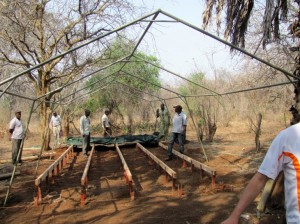
Traditional and Peer Mentoring: The three young men in the back are community volunteers in Gisenyi, Rwanda who have set up an informal weekend mentoring program with 14 and 15-year-old street orphans to encourage them to stay in school to build a better life. The boy on the left is 15-years-old and often watches out for, mentors and takes care of some of the 14-year-olds.
And there are various types of mentoring relationships:
• Traditional – two people of different rank or status where the senior mentors the junior – such as teacher to student or sales manager with a new salesperson.
• Peer – where two people of the same rank or status form a mutual mentoring relationship – such as two teachers or two employees in the same job
• Reverse mentoring – a new concept where the traditionally junior member of the relationship actually mentors a senior person in an area of life knowledge – such as a student who grew up in a ghetto mentoring a white teacher who has always lived in a suburban middle class environment.
These mentoring relationships can range from structured and scheduled to informal where the mentee occasionally contacts the mentor periodically when he or she needs assistance. And finally, one benefits most by having multiple mentoring relationships addressing various aspects of life and vocational growth at the same time. This is termed as having a “constellation of mentors.”
Feel free to email me at [email protected] if you want me to send you a copy of my mentoring powerpoint presentation.