
Strategic Human Resources Planning – Part 2 of 2 (Talent Development and Diversity)

This blog is loaded with lots of useful links – please explore them!

In part 1 (link), published last week, I argued that Human Resources Strategic Planning should be one of the foundational activities for any enterprise since expenditures on people resources are most often the largest expense . In addition, in an increasingly commoditized world, talented people are now most often the differentiating factor in outpacing competition and winning market share. I find it very ironic that many executives do not get this and spend very little time or money developing human resources and leveraging their talent.
HR March 2014
I then summarized an outstanding practical workshop that Molly Hegeman, VP of HR Services for CAI (link) presented at the January monthly meeting of TSHRM (Triangle Society of Human Resource Management.) In this session, Molly defined strategic planning, provided the steps to do it, and highlighted key emerging areas to consider while planning.

In part 2, I will highlight my two areas of consulting expertise and how they fit strategically into Human Resources Planning: talent development and diversity management.

My first area is in employee talent and career development with my innovative Total Engagement Career Mapping services. This is a process that is customized for the individual enterprise to engage employees in longer range career planning. In addition to assisting employees to gain key competencies for their current position, companies should prepare their talent for positions 3, 5 or 10 years down the road and build a robust leadership pipeline. When employees are engaged in meaningful career planning, they are more excited about their work and productivity improves. In addition, companies experience lower attrition and can save millions of dollars in additional recruiting and onboarding costs.

Additional resources:

An online article in ZipRecruiter about his process: How to Attract and Retain Top Talent through Career Mapping.

A blog: Are You Protecting Your Company’s Largest Investment?

A blog: How to demonstrate the business case for investment in employee development

My second area is Diversity Management – I can handle all areas of diversity strategy, program execution and training, with a deep specialty in the LGBT (Lesbian, Gay, Bisexual, Transgender) workplace and marketplace. Companies are increasingly understanding that an organizational diversity strategy is not just simply a good thing to do, but is a critical component for business success. Recruiting top talent from the widest possible talent pool, leveraging diverse talent with innovative ideas, connecting positively with a wide range of community organizations, and reaching out to new diverse markets are all key factors in increase profitability.

An additional resource:

A Blog: Demonstrating a business case for investment in diversity initiatives.

Please feel free to contact me at [email protected] to set up a call to discuss how my expertise in these two areas can benefit your enterprise!
Strategic Human Resources Planning – Part 1 of 2

Investment Priorities
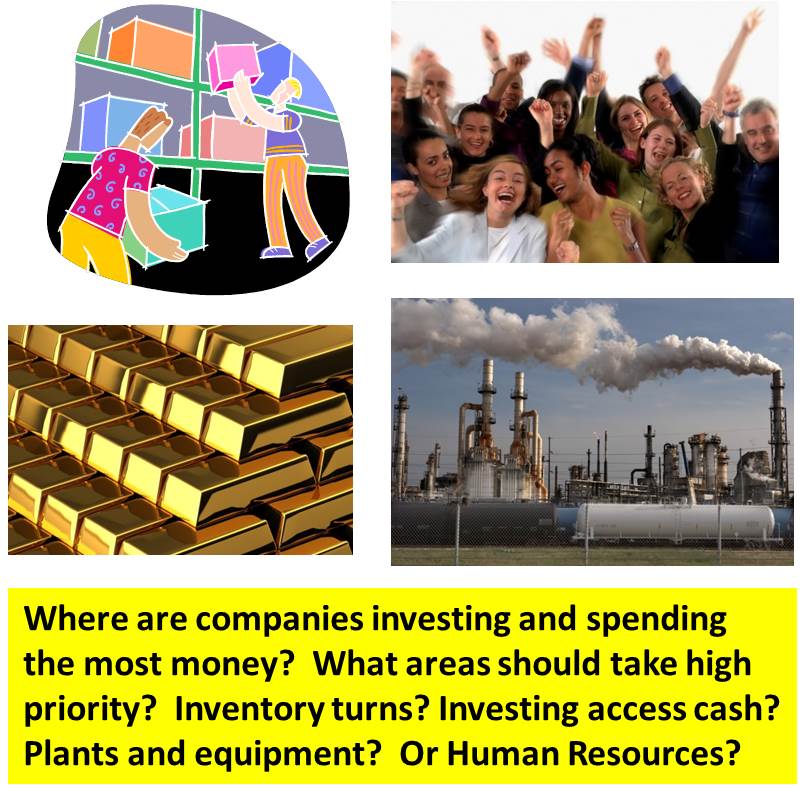
Too many people consider Human Resources within an enterprise as one of those necessary evils that one must have to stay out of trouble. In reality, Human Resources should be considered one of the most critical functions at the center of building competitive advantage and business success. Why? Because for most companies, expenditure on people is the single largest area of investment. (See my earlier blog on this.) And isn’t it interesting that financial executives spend so much time and energy looking at inventory turns, investment of access cash and building / land investments instead of investment in their people?

Therefore, Human Resource Management should be one of the critical core functions present at the highest levels of corporate leadership. At a Raleigh-Wake Human Resources Management Association chapter meeting I attended over a year ago, former SHRM (Society of Human Resource Management) president Johnny Taylor, Jr. presented “Courageous HR” (link to blog) discussing how HR managers need to be more bold in demonstrating leadership and providing significant impact on a company’s success.

And now to kick off 2014, the Triangle Society of Human Resources Management (TSHRM) presented an excellent speaker, Molly Hegeman, VP of HR Services for CAI (link), on “Strategic Planning: A practical way to focus on what is important.” This meaty session provided a structured practical approach to HR professionals strategically planning and aligning the Human Resources function with corporate goals.
Strategic Planning Feb
Molly began with a definition of strategic planning: “a systematic process for ensuring a desired future and translating this vision into broadly defined goals and objectives along with a sequence of steps to achieve them.”

Molly’s presentation included the four steps for Strategic HR Planning:
1. Assessing the current human resources capacity of the organization – where are we?
2. Forecasting future human resources needs , which includes both the employee requirements or demand needed to achieve corporate goals as well as current supply.
3. Completing a gaps analysis which is documenting what is missing or needs to be improved on from the current state to achieve future goals.
4. Ensuring that HR strategies and execution can leverage existing capacity and develop new resources to meet requirements.

In addition, Molly summarized the important industry trends that need to be considered while doing strategic planning. These trends included:
• The impact of corporate culture on attracting and retaining employees
• Impact of the overall work climate
• The focus on differentiating, rewarding, retaining the top performers
• Truly paying for performance, for impact, contribution
• Emerging variable pay plans and flexible scheduling

Of course there was so much more in this session than can be covered in this short blog. She covered practical suggestions on how to do this and the importance of communication along the way.

In part 2, I will expand on how my two areas of expertise, diversity and career development, are central to human resource strategic planning and corporate success.

# # # #

Molly Hegeman is VP of HR Services for CAI (link). CAI is a trusted resource for HR, compliance and people development serving approximately 1,100 member companies in Eastern and Central North Carolina.