
Sexism, Racism and the Dynamics of Power

Four men whose careers have been disgraced by sexual harassment episodes, clockwise from top left: Matt Lauer (money.cnn.com), Harvey Weinstein (Business Insider),
Judge Roy Moore (NBC news), Senator Al Franken (ABC news)

A lot continues to be written and discussed about racism, defined as “the belief, often accompanied with behavior, that race is the primary determinant of human traits and capacities and that racial differences produce an inherent superiority of a particular race.” And with the latest slew of sexual harassment charges against well known business, political and entertainment leaders, sexism is once more on top of minds. A good definition of sexism is “attitudes or behavior based on traditional stereotypes of gender roles, including discrimination or devaluation based on a person’s sex or gender, as in restricted job opportunities, especially such discrimination directed against women.”

But the main other ingredient that is critical to discussing both racism and sexism is the “power dynamic.” The real problem is when people in power use that power to degrade and unfairly treat either individuals or entire groups of people.

Let’s first look at sexism and sexual harassment. I would assert that if an entry level or lower salaried man sexually harassed a co-worker or client, they would immediately be fired. But when it is senior executive or top performer in an organization, so often the violation is minimized, excused or never addressed. The Human Resources professional who receives an allegation of sexual misconduct by a senior executive may be afraid to investigate. They may believe that the senior executive could quickly negatively impact their career or job. They say, “We can’t go after that executive – he is far too powerful.” Or when the top salesman makes a sexual move on a younger junior colleague in the office, the excuse is, “Well, he is the top performer, we need him.”

Drastic actions must be taken to address sexual misconduct by those in power by boards of directors and the Human Resources profession. See my blog, “Five Provocative Recommendations to Address Sexual Harassment in the Workplace.”

Second, let’s look a racism, especially institutional racism, which “occurs specifically in institutions such as governmental bodies, corporations and universities where systemic policies and practices within the institution have the effect of disadvantaging certain racial or ethnic groups.” See my blog on personal and institutional racism that includes examples.

The disproportionate arrest and incarceration of black men indicates that institutional racism may very well be a part of our justice system. (Photo courtesy American Renaissance)

In this case, it is not one individual in power exploiting their position to mistreat another, but instead it is societal power. In our nation, where the white majority has been in control of almost all of our institutions, it is easy to set up systems and structures that disadvantage minority populations. And this can include deliberate institutional racism (like the Jim Crow laws of the past) or unintentional racism due to lack of awareness of the needs of other groups. Therefore, it is critical for the majority group in power to have open and honest dialogues with all constituent populations in setting up systems and structures, and to continually educate themselves on all forms of diversity.

Hopefully with deliberate, thoughtful, strong actions we can continue to progress in addressing racism and sexism, and hold leaders accountable who abuse their power. This will lead to a stronger nation and economy where everyone is valued, treated fairly and can contribute their very best.

A Best Practice in Diversity and Inclusion and Employee Resource Groups from Advance Auto Parts

Kiwanda Stansbury, Director, Inclusion and Diversity, Advance Auto Parts, Speaker at the North Carolina Diversity Best Practices Meeting.

In the diversity and inclusion field, there continues to be continued discussion on the importance of Employee Resource Groups, or ERGs. Traditionally, they have been referred to as “affinity groups” as they bring together employees around a common constituency factor such as Black, Hispanic, Women, Young Professionals, LGBT (Lesbian, Gay, Bisexual, Transgender), Veterans and more. These groups help make employees feel more at home and included in the workplace, and provide activities such as professional and social networking, mentoring and community involvement.

As a diversity and inclusion consultant, I often attend various workshops to continue to pick up the latest development in my field. In early July, I attended a half day “Diversity and Inclusion Best Practices” seminar organized by the National Diversity Council – Carolinas in Durham, NC. One of the presenters was Kiwanda Stansbury, Director, Inclusion and Diversity, Advance Auto Parts.

Ms. Stansbury started off by stating that Advance Auto Part’s and her mode of operation is to foster change and target to do things differently and better. That was evident in the way they structure and execute their employee resource groups, which they call “Team Member Networks” which follows their corporate nomenclature of referring to their employees as team members. Current Team Member Networks include:
• Women in Motion Network (WIMN)
• Knowledge Network – Diversity of Thought
• A.L.I.G.N. – African Americans Leading Inclusion and Growth Network
• S.E.R.V.I.C.E. – Serve, Educate, Recruit, Value, Celebrate and Empower (Veterans)
• #Connext – Millennial Network
• Amigos Unidos – Hispanic / Latino
• Advance Pride – LGBTQ
• R.I.C.E. – Recognizing International Cultures and Ethnicities

And Ms. Stansbury’s position title was different than normally found in the diversity and inclusion field in that her title is Director, Inclusion and Diversity. This highlights that inclusion is the real emphasis since that is where the work happens. Diversity is a fact of life, but inclusion is the hard work or making sure everyone is welcomed and valued in the workplace.

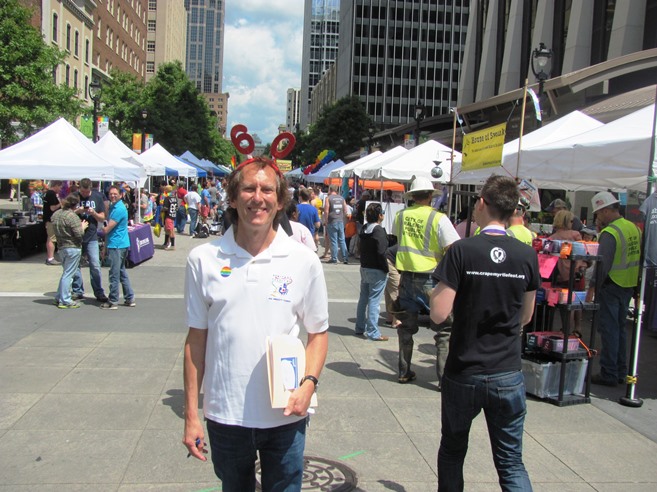
Company Resource Groups very often staff booths and tables at community diversity activities like this one I attended on my 60th birthday.

The major best practice that Ms. Stansbury shared was Advance Auto Parts’ robust and structured approach to inclusion and diversity which includes aligning their Team Member Networks to the overall organization’s strategy. They have established a structure and approach around four agreed upon key focus areas (i.e. pillars) that keep the networks aligned with corporate strategy:
Team Member Inclusion and Development
Talent Acquisition and Retention
Customer and Community Outreach which involves connecting team members to the customers and communities they serve through outreach and community service projects.
Business Alignment which includes aligning with the cultural shift, corporate strategy, tying to organizational health and establishing metrics to measure efforts.

Providing a strong framework around inclusion efforts will surely benefit Advance Auto Parts’ Team Member Networks by providing them a structure to operate so they thrive and be effective for both the corporation and the team members over the long term.

* * * *

Other Blogs I have written about Employee Network Groups:

Evolving Employee Resource Groups – a Creative Approach from Erie Insurance, which I wrote after the 2016 National Diversity Council – Carolinas Best Practices meeting.

Diversity Councils and Employee Resource Groups – Not “either / or,” but “both / and” which I wrote in response to one firm planning to close down their employee resource groups.