
Are you, is your company protecting your largest investment? So now you may be asking, “What is our largest business investment?” Is it in plant and machinery? Or inventory? Or perhaps some key databases with product or client information? Where is your largest investment?
Many executives and managers may not realize that for most organizations, the largest expenditure or investment is in people, often times referred to as “human resources.” According to Rick Anicetti, former CEO of Delhaize America (parent company for the well-known leading grocery chain Food Lion), a company’s people and their ability to get things done better and faster can be one of the true differentiators in a very competitive global market. In a small business dinner sponsored by the Triangle Organizational Development Network (see blog about this meeting), Rick further went on to state that “a company’s human resources (or people) are not only the most important investment of the company, but also its most expensive and fragile resource.”
The criticality of human resources is further confirmed by a recent e-mail I received from the Society for Human Resource Management (SHRM) that quoted a recent survey: HR professionals have stated that the biggest challenge they face over the next 10 years is retaining and rewarding the best employees (59% listed this in their top 3 challenges) and the second biggest challenge is developing the next generation of corporate leaders (52% listed in their top 3.) Clearly, especially as the economy improves, companies need to step up their focus on retaining their critical human resources.
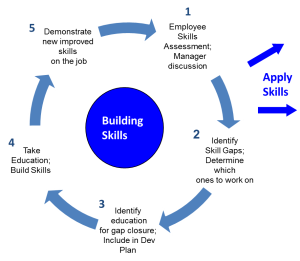
A good career plan will have a balanced approach to building short term skills for the current job and looking at longer term career development
One of the most proven ways of engaging employees and retaining top talent is to invest in career and skills growth programs. These programs need to provide education and opportunities to enhance current skills, but beyond that should also provide some longer term career guidance. Providing career path examples and encouraging a longer term focus can provide employees motivation to stay within the enterprise to develop a rewarding long term career.
Total Engagement Consulting offers an innovative approach using organization-specific career road maps that can fully engage your staff by providing valuable career progression information to keep them vital, enthused and wanting to grow their careers. Here are two additional links:
1. Link to more details on Total Engagement Career Road Mapping Services.
2. Link to a methodology for calculating financial business justification for career services.
You may also contact me at [email protected] for a word document summary of these services and to discuss how this process can be tailored to you so you can optimally engage and retain your most valuable resource.
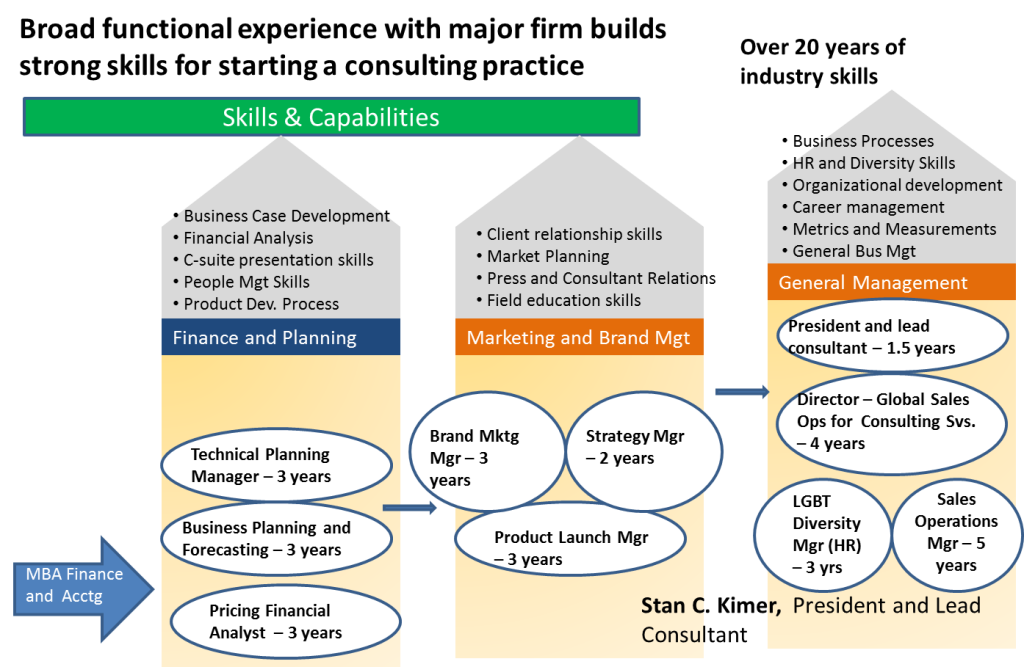
My own career road map as an example – it contains a mapping of my career positions as well as the skills I developed in various roles. This map can then be used to provide career path guidance to others seeking a career in consulting.
